The Isle of Skye is home to some spectacular wildlife, ranging from minke whales and dolphins to puffins and golden eagles. This Scottish island is a haven for wildlife enthusiasts, with the chance to see some of the UK’s most incredible species. Whether you opt to search for wildlife yourself on walks or take wildlife watching tours, the Isle of Skye won’t disappoint! There are some great spots around the island to observe wildlife, including Neist Point and a number of large lochs. Learn more about the best wildlife in the Isle of Skye below!
Want help deciding the best things to do during your time on Skye? Check out this amazing 5 day Isle of Skye itinerary!
Best Wildlife on the Isle of Skye
Sea Eagles
One of the most impressive bird species in the Isle of Skye is the white-tailed eagle, also known as the sea eagle. This wonderful species was previously eradicated from the UK, but has since been reintroduced and there are now 12 pairs that are resident on Skye.
The sea eagle is the largest bird of prey in Britain, and with an average wingspan of 2.18 metres they are sometimes referred to as ‘flying barn doors’. There are an estimated 150 pairs of sea eagles in the UK, meaning almost 10% of their population live on the Isle of Skye.
Sea eagles are regularly seen in the cliffs of Portree Bay, with boat tours from Portree offering reasonably reliable sightings of this beautiful species. With a bit of luck they can be seen elsewhere around the island, including on boat trips from Elgol in the south of Skye.
Minke Whales
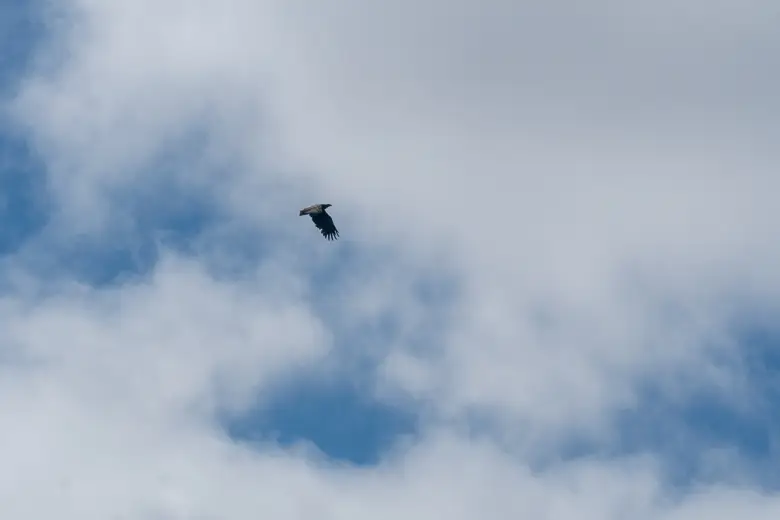
The seas surrounding the Isle of Skye are home to some magnificent wildlife, with minke whales found in the waters between May and October. With an average size of roughly 8.5-9 metres, minke whales are a truly impressive sight.
These majestic animals can be seen both from shore and on wildlife watching tours. One of the best places to see minke whales on the Isle of Skye itself is Neist Point – a headland with towering cliffs overlooking the sea.
If you opt for a whale watching tour from the Isle of Skye, they will likely head to the Small Isles – a small archipelago between Skye and Mull. Some of the main hotspots for minke whale sightings are the islands of Rum, Eigg, and Muck, all of which can be visited on wildlife watching tours from Skye.
Although minke whales can be seen in Skye between May and October, sightings tend to peak in June and July. Other whale species can sometimes be seen around the Isle of Skye, including humpback whales, sei whales, sperm whales, and fin whales – but sightings are very rare.
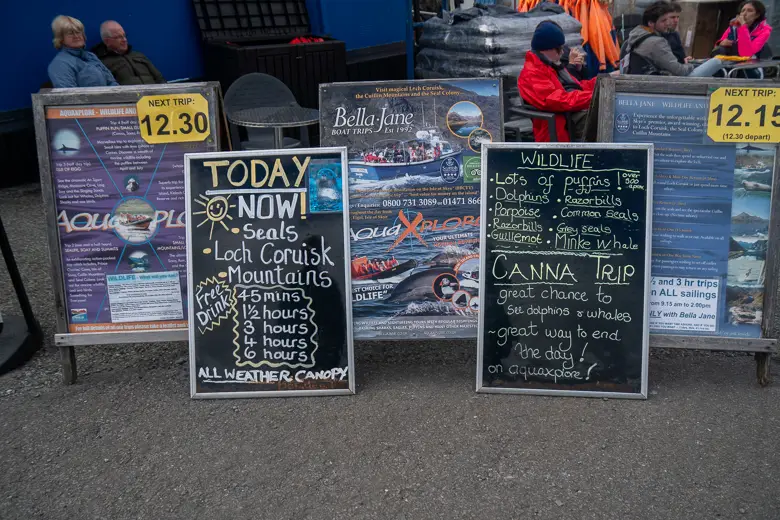
We personally recommend taking one of the AquaXplore boat trips from Elgol, which are run by Bella Jane Boat Trips. They have some brilliant wildlife and whale watching tours available on the Isle of Skye – although minke whale sightings can’t be guaranteed. Click here to find out more on the AquaXplore website!
Puffins
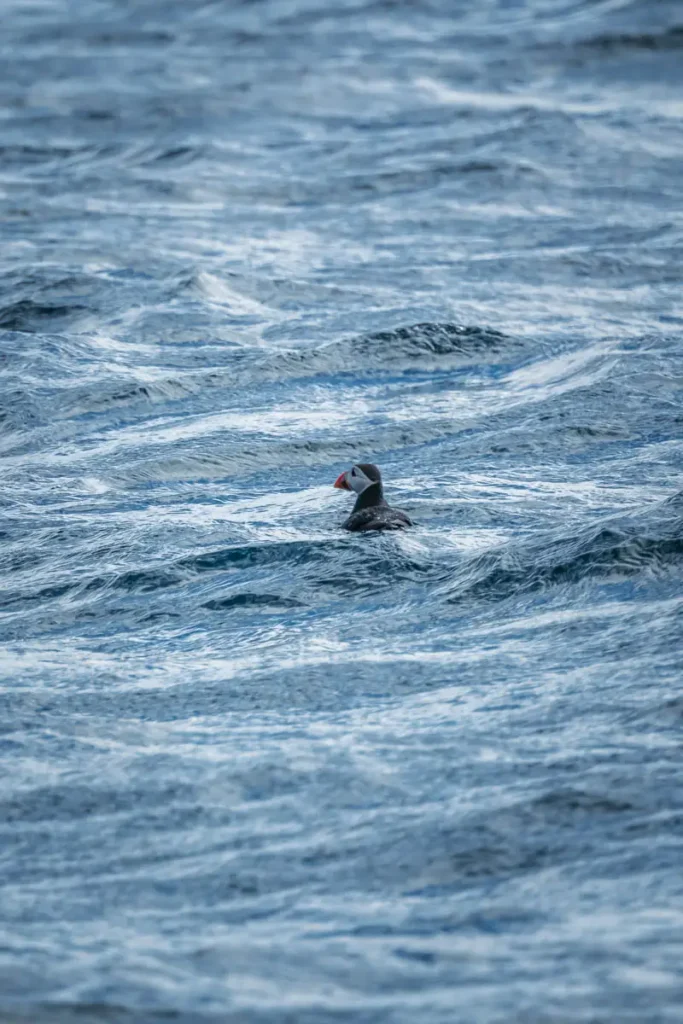
Of all the brilliant wildlife in the Isle of Skye, puffins are up there as one of our personal favourites. These small sea birds are great divers and swimmers, and are well known for their brightly coloured bills.
Sightings of puffins on the Isle of Skye itself aren’t overly common, with sightings mainly coming in early spring during March and April. A large puffin colony nests on the nearby Isle of Canna between April and July, which means sightings are guaranteed on wildlife watching boat trips from the Isle of Skye during these months — making it one of the best places to see puffins in the UK.
AquaXplore run a specific Puffin Run trip, which specifically focuses on seeing the puffins at Canna. These tours cost £72 per person, and for us this trip was a highlight of our time in Skye. Click here to find out more or book your tour via their website!
During our trip we saw hundreds of puffins flying around the boat, diving into the water, and nesting in nearby cliffs. If you want to get some up-close views and photos of puffins, these tours are simply unmissable as they can guarantee wonderful views of these beautiful birds!
For even more incredible encounters, head to North East England and go puffin watching on the Farne Islands, where around 100,000 of these colourful characters nest every year.

Dolphins
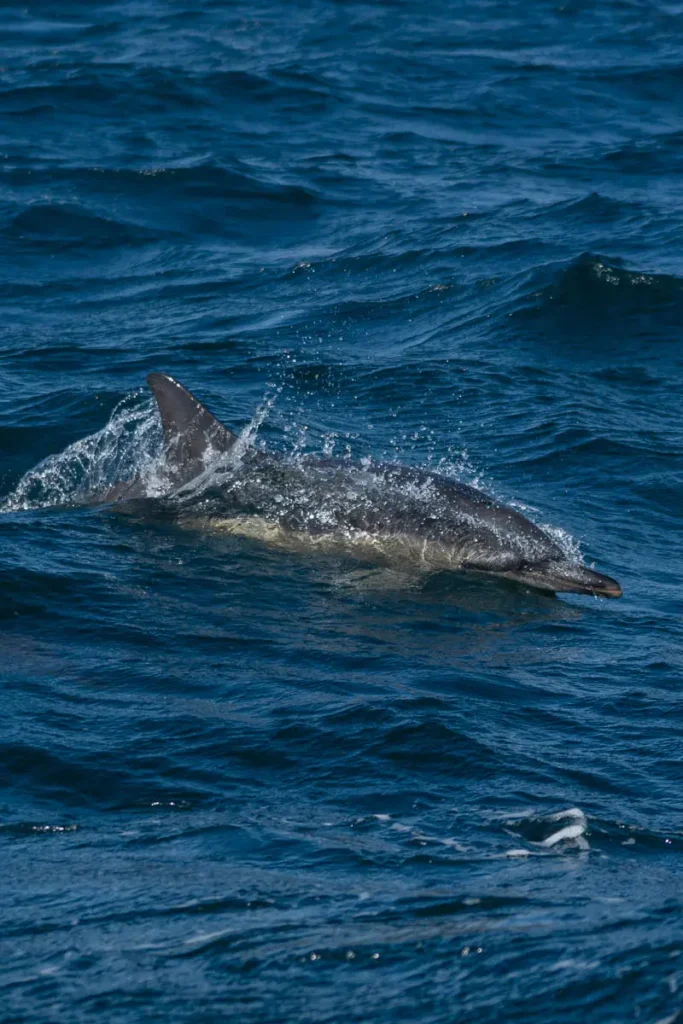
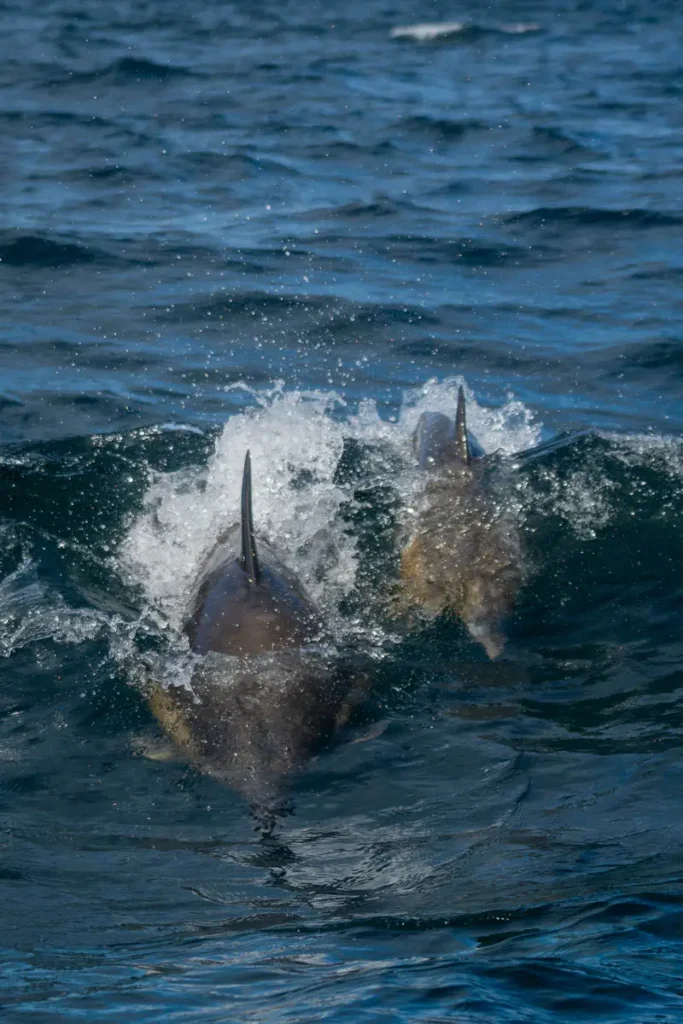
Minke whales aren’t the only impressive marine life that the Isle of Skye has to offer, as dolphins are seen somewhat regularly in the island’s waters. It’s possible to see two different dolphin species in Skye – the common dolphin and the bottlenose dolphin.
The best way to encounter dolphins is on wildlife watching boat tours from the Isle of Skye, but it is sometimes possible to see them from land too. The best places to spot them from land are Neist Point and in the Minch from Lower Milovaig.
On boat trips it’s possible to encounter huge pods of dolphins, with hundreds or even thousands of individual dolphins grouping together. We took a boat trip from Elgol and saw a pod of over a hundred dolphins playfully jumping out alongside us – which was an unforgettable experience!
Dolphins are most commonly seen in Skye between April and October, with June and July normally proving the best month for sightings. If you want the chance to see dolphins elsewhere in Europe then make sure to read our guide to whale and dolphin watching in Funchal, Madeira!
Golden Eagles
Golden Eagles are another example of the amazing birdlife on the Isle of Skye. These majestic birds can be seen all across the island, and parts of central Skye and the Cuillins mountains are designated as a Special Protection Area for the species.
There are approximately 30 pairs of golden eagles on the Isle of Skye, but of course this number is subject to change. Golden Eagles have an average wingspan of roughly 2.05 metres, making them one of the largest birds of prey in Britain.
Spotting golden eagles in Skye does require time and patience, as there is no way to guarantee a sighting. The best option is to try and find a secluded high up area with a good view over an expanse of countryside, as they tend to favour high moorlands and rocky mountains.
Golden Eagles do nest in cliffs, but during breeding season they are extremely vulnerable to disturbance. To get decent views you will need a good pair of binoculars, or ideally even a telescope.
In some cases you may be able to spot golden eagles on a wildlife watching boat tours from the Isle of Skye, and we were fortunate enough to see one on our trip to the nearby island of Canna. Unfortunately the eagle was flying very high up, so we didn’t get a great view – but it was still nice to see!
Seals
The Isle of Skye is home to two species of seal, which can be seen in a number of lochs and bays around the island. Both common seals and grey seals are resident in Skye all year round, and can be spotted swimming or basking on rocks.
Common seals grow up to 6 feet in length, whilst grey seals are much larger with adult males growing up to 11 feet long. The common seals breeding season is during summer and the grey seals breeding season runs from autumn to winter.
It’s possible to see seals basking near the shores of one of the island’s lochs, so keep an eye out as you walk or drive around the island. During our time in Skye we spotted seals close to the shore of Loch Dunvegan on several occasions.
Some of the best places to see seals on the Isle of Skye are Neist Point, Loch Dunvegan, Kylerhea, and Loch Coruisk. For the most reliable sightings it’s best to take a boat tour, and there are several tours available around the island.
One of the most budget friendly options is the seal watching trip from Dunvegan Castle, which costs just £12 per adult, and £9 for children. Click here for more information on seal trips from Dunvegan Castle!

Red Deer
The Isle of Skye’s red deer population is another great example of the island’s amazing range of wildlife. They are the UK’s largest land mammal, growing up to 2.5 metres in length, and there is a large population of them in the west coast of Scotland.
Red deer can be seen on the Isle of Skye all year round, making it one of the best places to see these animals in the UK. They are more commonly seen during the winter months when they come down from the hills to graze at lower levels, but can still be seen at higher ground in other months.
Each year stags (male deer) grow antlers in preparation for the rutting season, which is during autumn. Rutting season is when deers mate, and involves stags fighting for the attention of females in order to mate with them.
Some of the best places to see red deer in Skye include Glen Sligachan, the Fairy Pools, and Strathaird.
Basking Sharks
During the summer months it’s possible to see basking sharks around the Isle of Skye. Basking sharks are the largest fish species in Britain, reaching up to 12 metres in length – which is roughly the same length as a double decker bus!
These slow moving sharks normally float close to the surface, and swim with their huge mouths wide open in order to feed on any plankton in the water. The Sea of Hebrides is one of the world’s hotspots for basking sharks, and there is a marine protected area for the species between Mull and the Isle of Skye.
Sightings of basking sharks around the Isle of Skye are somewhat sporadic, but mainly occur during the summer months. The best chance of a sighting is to take a wildlife watching trip from Elgol, as basking sharks are sometimes spotted during these boat tours from Skye.
If you are hoping to see basking sharks without taking a boat trip then they are sometimes found in sheltered coves around Neist Point and Milovaig.

Otters
Otters are another example of the wonderful wildlife on the Isle of Skye. Scotland is home to an estimated 8,000 otters, which accounts for over two thirds of Britain’s otter population.
They can be found along Skye’s coastline, as well as in the island’s lochs and rivers. The otters found on the island are European otters, which are roughly around 3 feet in length.
Spotting otters on the Isle of Skye requires a reasonable amount of patience, as they can be quite elusive. The best time of day to spot them is at dawn or dusk, and it’s best to have a pair of binoculars to observe from afar as they tend to avoid any disturbance.
One of the best places to see otters on the Isle of Skye is at the Kylerhea Otter Hide, which is accessible via a 2 kilometre walking trail. Otters can also be seen elsewhere, including at Loch Pooltiel.
Isle of Skye Birdlife
As you can tell from this list of the incredible wildlife on the Isle of Skye, the island is home to an array of birdlife. There are a number of other wonderful bird species that can be seen around the island that are worth mentioning too!
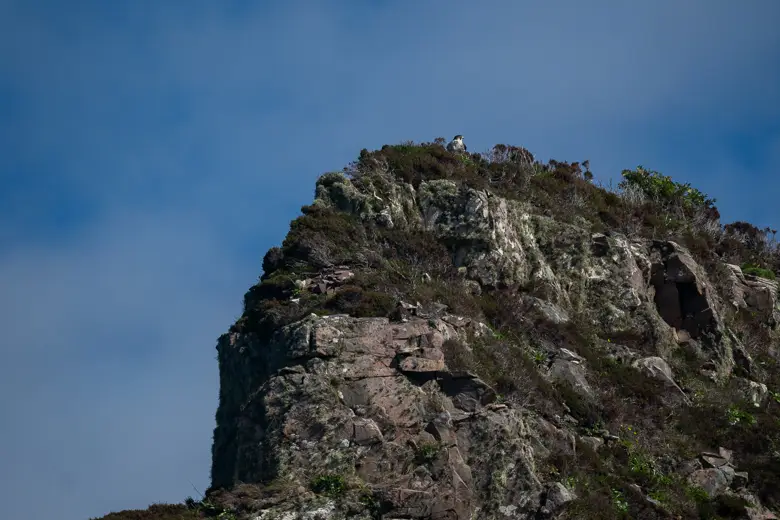
Some of the other bird species that can be seen around the Isle of Skye include kittiwakes, peregrine falcons, skylarks, gannets, skuas, auks, guillemot, razorbills, fulmars, and shags. This list is by no means exhaustive, but gives you an idea of the varied wildlife and birdlife in Skye!
One of the best spots for wildlife sightings on the Isle of Skye is Neist Point, where you can see a number of these bird species. We recommend spending time there with a pair of binoculars and seeing what species you can see – and remember to keep an eye on the water for any sightings of minke whales or dolphins too!
One of the best ways to see a range of bird species in Skye is to take one of the wildlife watching boat trips, especially one of the trips that visits the Small Isles. These nearby islands are home to a range of brilliant species, and so you’re likely to see a number of the birds listed above on one of these trips.

If you want to discover more amazing wildlife in the UK then we recommend visiting the Welsh island of Anglesey, where it’s possible to see red squirrels in the Dingle Nature Reserve!
Please note that some links in this article are affiliate links, which means if you make a purchase we make a small commission at no extra cost to you. This money is used to support this website and cover the costs of keeping it online and free to access!
Like this guide to the best wildlife on the Isle of Skye? Pin it!