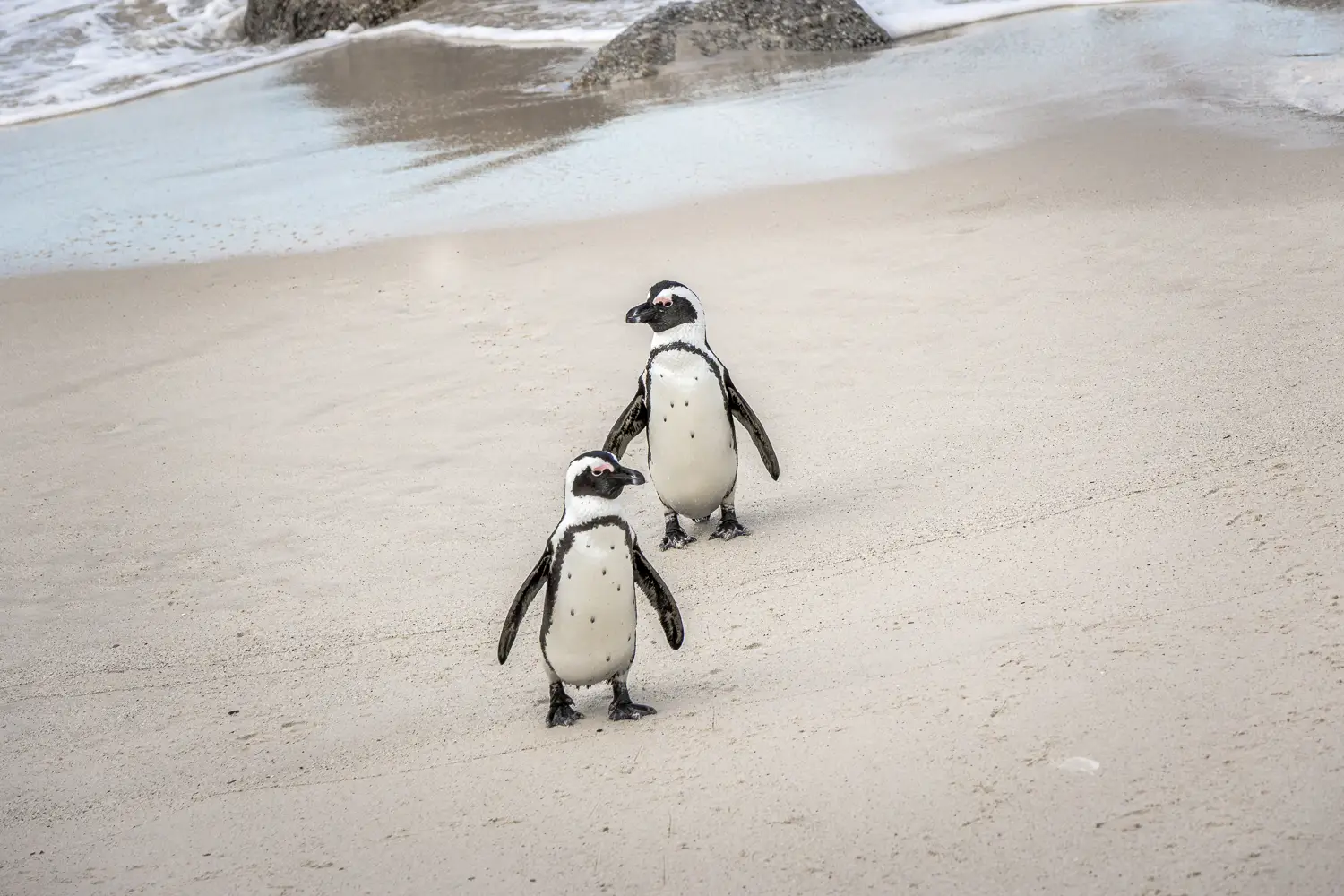
South Africa is world-famous for its safaris, but Cape Town’s wildlife is unmissable if you want to see more than just the Big Five. The city boasts everything from the famous penguins at Boulders Beach and migrating Southern Right Whales to colourful sunbirds in the mountains. Spots like Table Mountain and Kirstenbosch are must-visits for nature lovers hoping for a glimpse of Cape Town’s unique species, while whale watching tours and scuba diving trips are the best way to get up close to the city’s marine life. Here’s your guide to the best wildlife experiences in Cape Town.
Planning to go on safari during your time in South Africa? Make sure to check out our essential South Africa safari tips before your trip!
Best wildlife encounters near Cape Town
Penguins at Boulders Beach
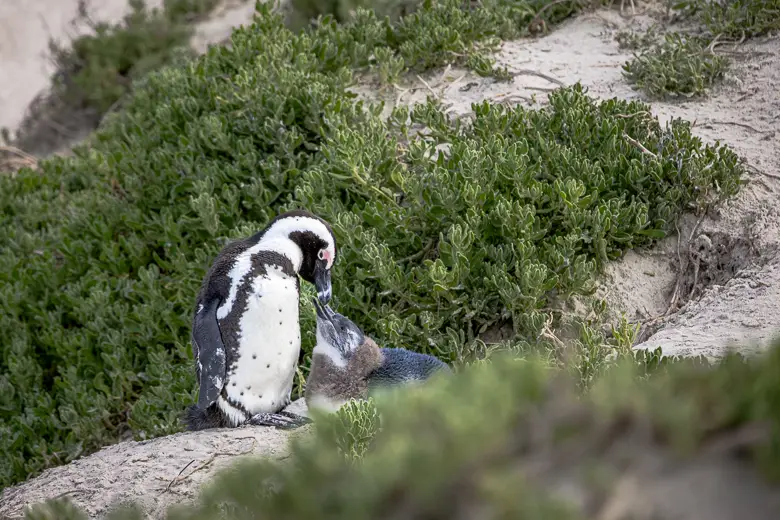
Seeing the penguins at Boulders Beach is one of the best wildlife experiences in Cape Town. It’s a brilliant opportunity to get an up-close look at critically endangered African Penguins, with their wild population now estimated at fewer than 20,000.
You can easily spot tens, or even hundreds, of penguins from the elevated boardwalks at Boulders Beach, which were built specifically to avoid disturbing their nesting grounds. As of 2025, the entry fee for international visitors at Boulders Beach is R215 for adults and R105 for children (aged 2–11), and the penguins are present year-round, so you can see them no matter what time of year you visit.
Breeding season runs from February to August, with the peak being from March to May, and in the following months, you’re able to see a number of fluffy penguin chicks in the area. The beach is located in Simon’s Town, approximately a 40–50 minute drive from central Cape Town.
The easiest way to see the penguins is to book a tour to Boulders Beach through Get Your Guide, with many options including stops at other iconic spots like Table Mountain and the Cape of Good Hope. Alternatively, you can opt for an Uber directly to the beach, but it can sometimes be hard to find a taxi back into the city from Simon’s Town.
Whale Watching in Simon’s Town
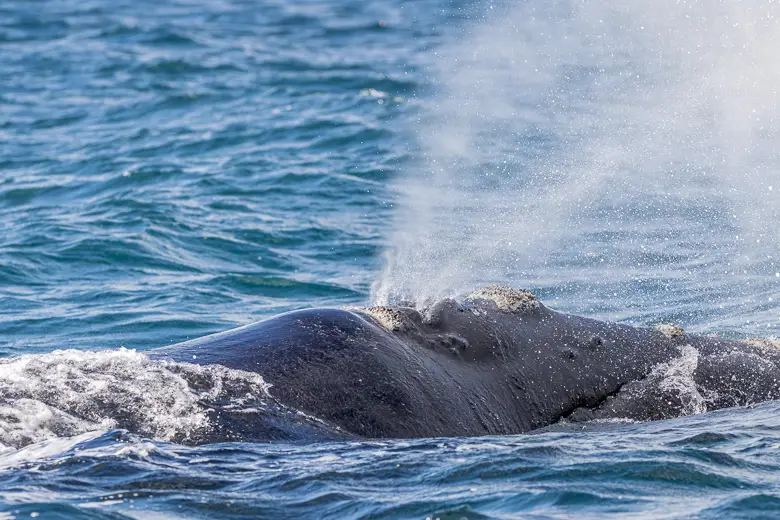
Although most tourists visit Simon’s Town to see the penguins at Boulders Beach, it’s also the starting point for whale watching tours in False Bay. With the chance to see Southern Right Whales, Humpback Whales, Bryde’s Whales, and more, these tours are one of the best ways to see Cape Town’s incredible marine wildlife.
The bay’s sheltered waters make it a hotspot for marine life, with regular sightings of Cape Fur Seals, and occasional appearances by dolphins and even Orcas if you’re lucky. Simon’s Town Boat Company is the only licensed operator in the area, offering tours twice daily from June to November, with a typical 95% success rate for whale sightings.
Tours cost R1600 per adult and R1100 per child (as of 2025), and if you’re already planning to visit Boulders Beach, then it’s definitely worth taking a whale watching trip while you’re in the area. Our tour was a highlight of our time in Cape Town, and we saw a Southern Right Whale, around a dozen Cape Fur Seals, a couple of African Penguins, and several seabirds.

Whale Watching in Hermanus
Hermanus has earned a reputation as one of the whale watching capitals of the world, making it a great choice for anyone willing to travel a little further out of Cape Town. Sightings in Hermanus are typically more reliable than in False Bay, and the whales come closer to the shore, so you can even watch them from dry land at times.
The whale watching season in Hermanus runs from June to November, and brings the chance to see Southern Right, Humpback, and Bryde’s whales, as well as dolphins, Cape Fur Seals, penguins, and various seabirds, including Cape Cormorants. Whale sightings are almost guaranteed throughout the season, and they typically peak from August to October.
To get the most out of your experience, we recommend taking a whale watching boat trip, which provides excellent up-close encounters with these gentle giants. Hermanus is nearly a two-hour drive from Cape Town, but there are tours that offer convenient return transport to save you the hassle of arranging your own way there.
It’s best to book ahead to ensure you don’t miss out, and thankfully you can easily book whale watching tours in Hermanus through Get Your Guide.
Seals at Hout Bay
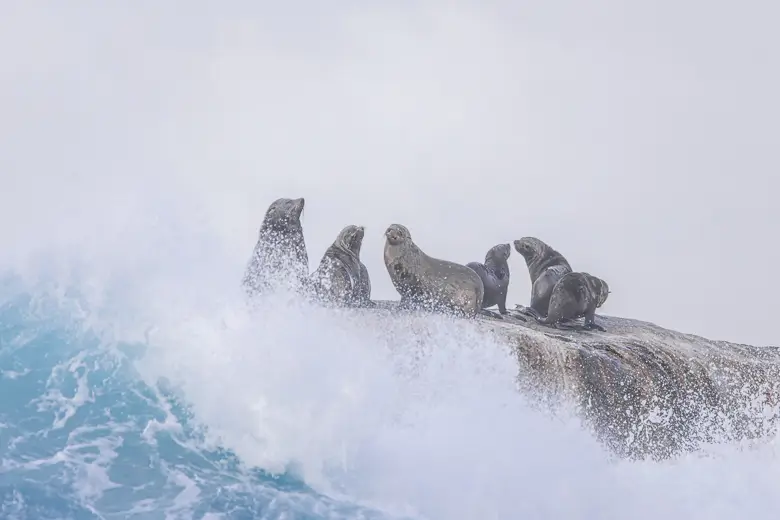
Just off the coast of Hout Bay lies Duiker Island, where you’ll find a colony of thousands of Cape Fur Seals. It’s easily the best place to see seals in Cape Town, and you’ll also have the chance to spot other marine species like dolphins and sunfish, as well as several seabird species.
There are a number of ways to see the seals, including boat trips to Duiker Island and glass-bottom boat tours of the bay. If you’re looking for a more thrilling experience, opt for a snorkeling or kayaking trip, which gives you the chance to get right alongside them in the water.
The seals are present in Hout Bay all year round, but the summer months (January to March) are generally the best time to visit, as that’s when the colony is at its largest. Whatever kind of tour you choose, the backdrop of Chapman’s Peak, Sentinel Mountain, and dramatic coastal cliffs makes this one of the most scenic wildlife experiences in Cape Town.
Click here to discover the best Hout Bay tours on the Get Your Guide website!
Dassies at Table Mountain
Among Cape Town’s more unusual wildlife is the Dassie, also known as the Rock Hyrax. These furry, short-legged mammals resemble a large guinea pig and are found on rocky cliffs around the city.
They’re frequently seen on Table Mountain, where you can spot them basking on the rocks as you hike to the summit. Even if you choose to take the Table Mountain Cable Car instead of hiking, you’ll still have a good chance to see them as they’re regularly found around the Upper Cable Car Station. Either way, a visit to Table Mountain is an unmissable experience in Cape Town, and the Dassies are an added bonus.
Dassies can also be seen in a number of other spots around the city. We spotted them at Boulders Beach and along the cliffs in Camps Bay, so keep an eye out for them around rocky outcrops and cliff faces.

Birdlife in the Kirstenbosch Botanical Garden
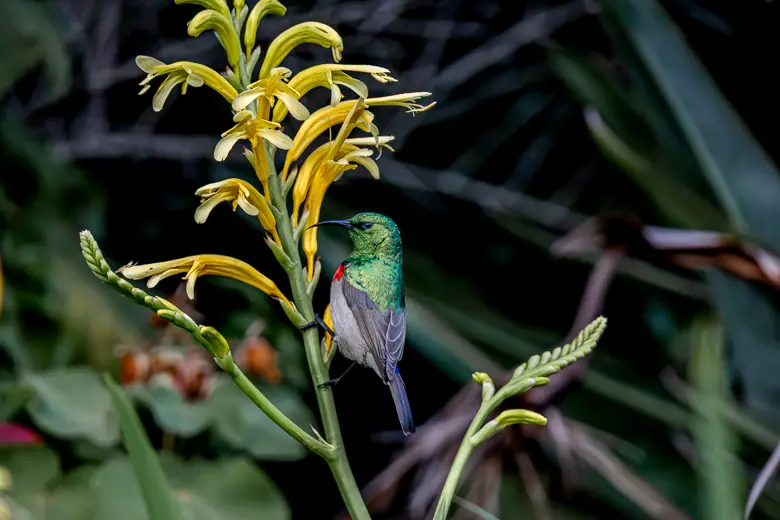
Widely considered one of the world’s most beautiful gardens, the Kirstenbosch Botanical Garden is an excellent spot for birdwatching. Among the diverse plant life, including the native fynbos and protea plants endemic to the region, you can see a number of different bird species.
During our visit, we saw several colourful Southern Double-collared Sunbirds, Cape Spurfowl, Egyptian Geese, African Dusky Flycatchers, and Red-winged Starlings. We didn’t get to spend as long here as we would’ve liked, but with more time, you can spot other striking species, including the Cape Sugarbird and Spotted Eagle-Owl.
One spot not to miss in the gardens is the Boomslang Walkway, an elevated canopy bridge that provides a great vantage point for spotting birds. Beyond the birdlife, the gardens are also home to Cape Grey Mongoose, several snake species, and much more.
Kirstenbosch is worth visiting for the mountain views alone, but the opportunity to get an up-close look at more of Cape Town’s wildlife makes it an even more rewarding experience.
Scuba diving in Cape Town
If you’re willing to brave the relatively cold waters, there are some brilliant scuba diving opportunities in Cape Town. The area’s kelp forests, reefs, and historic wrecks offer the chance to get up close to a diverse range of marine life, including Cow Sharks, Cape Fur Seals, octopuses, and more.
Popular diving spots include the kelp forests of Hout Bay and False Bay, where you’ll find fascinating species like Pyjama Sharks, Puffadder Shysharks, and stingrays. You can also explore historic shipwrecks, like the SS Maori and the Clan Stuart, which have become thriving artificial reefs for schools of fish and colourful nudibranchs.
Water temperatures range from roughly 10°C (50°F) in winter to 18°C (64°F) in summer, so a wetsuit or drysuit is recommended when diving in Cape Town. There are several reputable dive shops in various spots around the city, so check their recent reviews and book directly with one of the top dive centres.
Two of the top-rated operators are Dive Team and Into the Blue, and there are also a few freediving schools in the city, too.
FAQs: Cape Town Wildlife
Can you go on a safari or game drive from Cape Town?
Although it’s possible to arrange safaris from Cape Town, the experience often isn’t comparable to a true safari. Many of the reserves near the city, like Aquila Private Game Reserve, feed the animals, so it’s more like visiting a zoo or wildlife park than an authentic game drive. For a more ethical safari, we recommend visiting spots like Kruger National Park or Sabi Sands, where you can see South Africa’s incredible wildlife actually in the wild.
Where is the best place to see penguins in Cape Town?
The best place to see penguins in Cape Town is undoubtedly Boulders Beach in Simon’s Town, but you can also see them at Stony Point Nature Reserve in Betty’s Bay (although it’s around a 90-minute drive from the city). We did see a couple of penguins in the sea while on a whale watching tour in False Bay, but for closer encounters, it’s best to head to see one of the colonies on land.
Is shark cage diving in Cape Town ethical?
Great White Shark cage diving in Cape Town is generally seen as unethical by many wildlife experts. The practice of baiting can disrupt a shark’s natural feeding patterns and put the animals at risk of being injured by the boat or cage.
What wildlife can I spot on Table Mountain?
Table Mountain is home to an abundance of wildlife, with the Dassie being the easiest to spot around the trails and cable car station. Other animals seen in the area include the Cape Grey Mongoose and several snakes, such as the Cape Cobra. Birds of prey like the Verreaux’s Eagle and the Jackal Buzzard can also be seen soaring overhead at times.
Please note that some links in this article are affiliate links, which means if you make a purchase we make a small commission at no extra cost to you. This money is used to support this website and cover the costs of keeping it online and free to access!