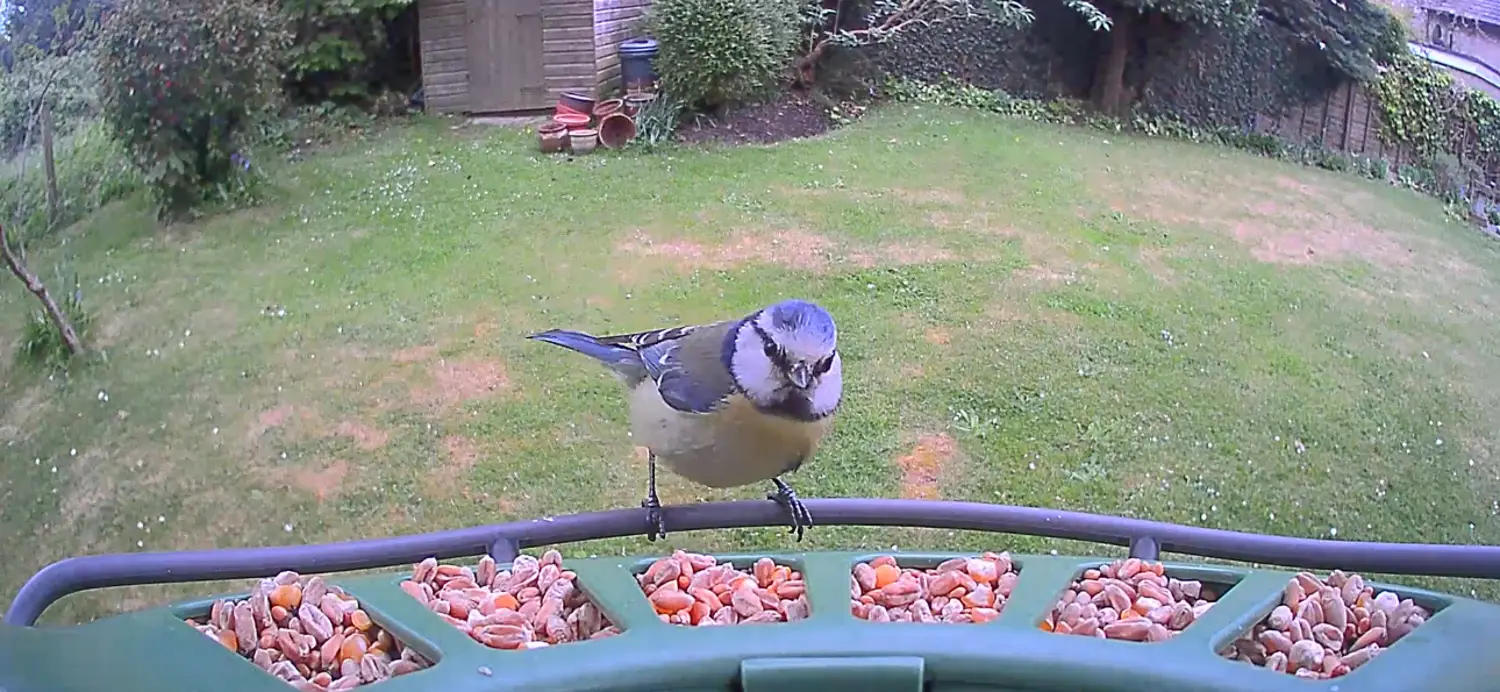
Boasting natural beauty and brilliant wildlife, Khao Sam Roi Yot National Park is one of the most underrated places to visit in Thailand. It’s a particularly great spot for birdlife, with over 350 species having been recorded in the park, from Indian rollers to white-bellied sea eagles. Other animal species found in Khao Sam Roi Yot National Park include leopard cats, dusky langurs, and several snake species. Wildlife can be seen all around the national park, but there are some particularly great areas for those wanting to see the park’s animals. Having spent two months living in the area, we were able to find some great wildlife watching spots. This guide covers the best places to see wildlife in Khao Sam Roi Yot National Park, from the Bueng Bua Wood Boardwalk to the famous Phraya Nakhon Cave.
Khao Sam Roi Yot National Park Information
Opening hours: Opening times vary depending on the location in the park, but roughly 8AM-4.30PM.
Entrance fee: 200 baht for adults and 100 baht for children.
Area: 98 square kilometres.
Wildlife species in Khao Sam Roi Yot National Park
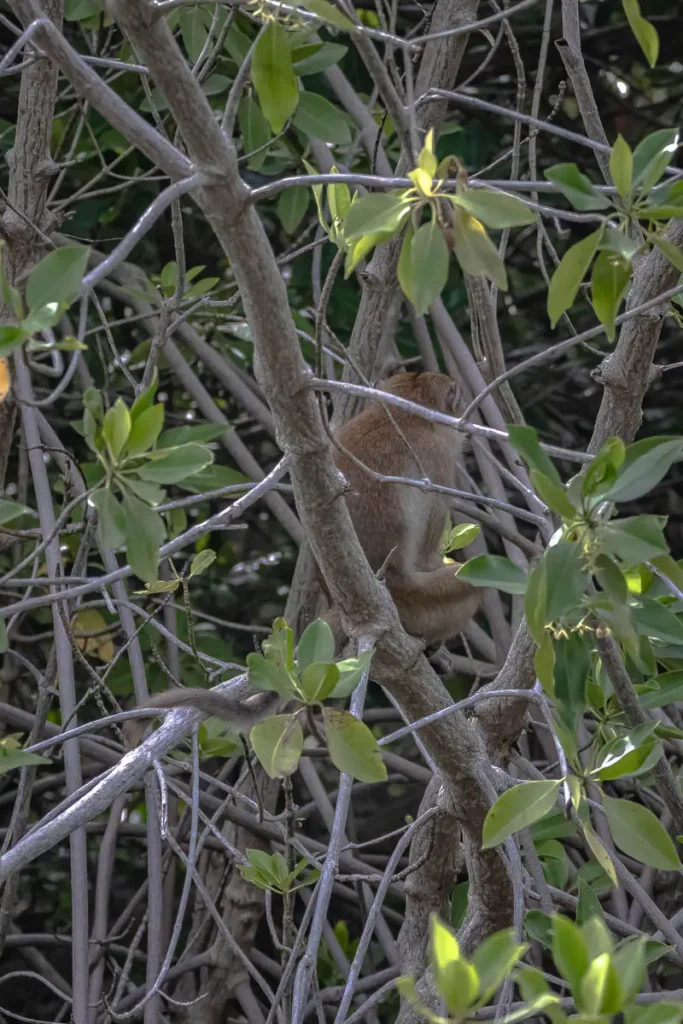
Khao Sam Roi Yot National Park is home to over 400 animal species, mostly birds. More than 350 bird species have been recorded in the national park, as well as 14 mammal species, 9 lizard species, 14 snake species, and 11 amphibian species.
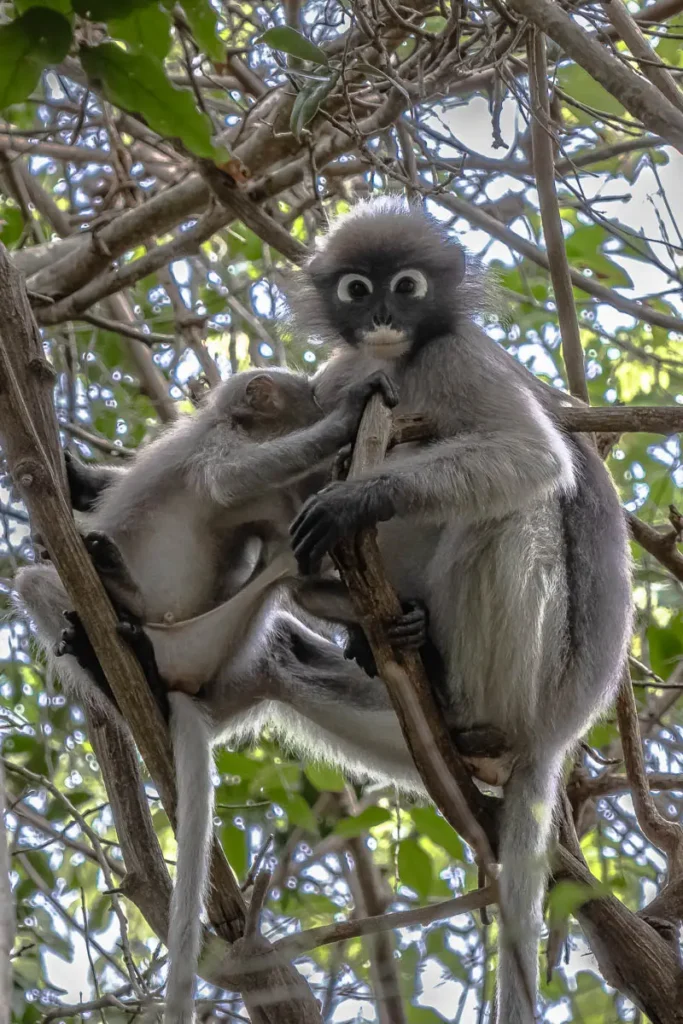
One of the most notable species in the national park is the Sam Roi Yot leaf-toed gecko, which is found nowhere else in the world. Another of the park’s most unique animals is the dusky langur, a species of primate only found in Thailand, Malaysia, Myanmar, and Singapore.
Best places to see wildlife in Khao Sam Roi Yot National Park
The only place on this list that doesn’t have an entrance fee is Sam Roi Yot Village. Entrance fees for the 3 places are 200 baht per adult. This entrance ticket is for the whole of Khao Sam Roi Yot National Park and is valid for one day, so you can visit multiple places in one day. You will need your own transportation or driver to visit these spots. We rented a car in Sam Roi Yot Village for 1000 baht for the day, the roads are generally in good condition and is a lot quieter than other places in Thailand so it was easy to drive around.
Phraya Nakhon Cave
Phraya Nakhon Cave is one of the most iconic spots in Khao Sam Roi Yot National Park and the hike there is a great place to see some wildlife. The cave itself is known for the ornate Kuha Karuhas pavilion, which is illuminated in sunlight if you visit at the right time of day and year.
It takes around 60 to 90 minutes to hike to the cave from the ticket office, and involves walking up and down two hills. Walking the whole way gives you the best chance of spotting the wildlife of Khao Sam Roi Yot National Park, but if you prefer you can skip part of the walk by taking a boat and bypassing the first hill.
The walk isn’t overly strenuous, but in the heat it can be challenging – so bring plenty of water and have an early start. Along the walk you will have the chance to see dusky langurs, long-tailed macaques, and a variety of bird species. Aim to visit close to opening time before the trail gets busier and any wildlife gets scared off.
Unfortunately we didn’t see any macaques on our visit, but we did see a large group of dusky langurs as we hiked to the cave. Keep an eye on the trees and listen out for any movement for the best chance of spotting some of the park’s wildlife.
Even if you don’t manage to see any animals, it’s still well worth a visit to the Phraya Nakhon Cave. The cave is deceptively large, and is one of the most naturally beautiful places to visit in Khao Sam Roi Yot National Park.
Possible wildlife sightings at the Phraya Nakhon Cave: Dusky langurs and long-tailed macaques.

Sam Roi Yot Village
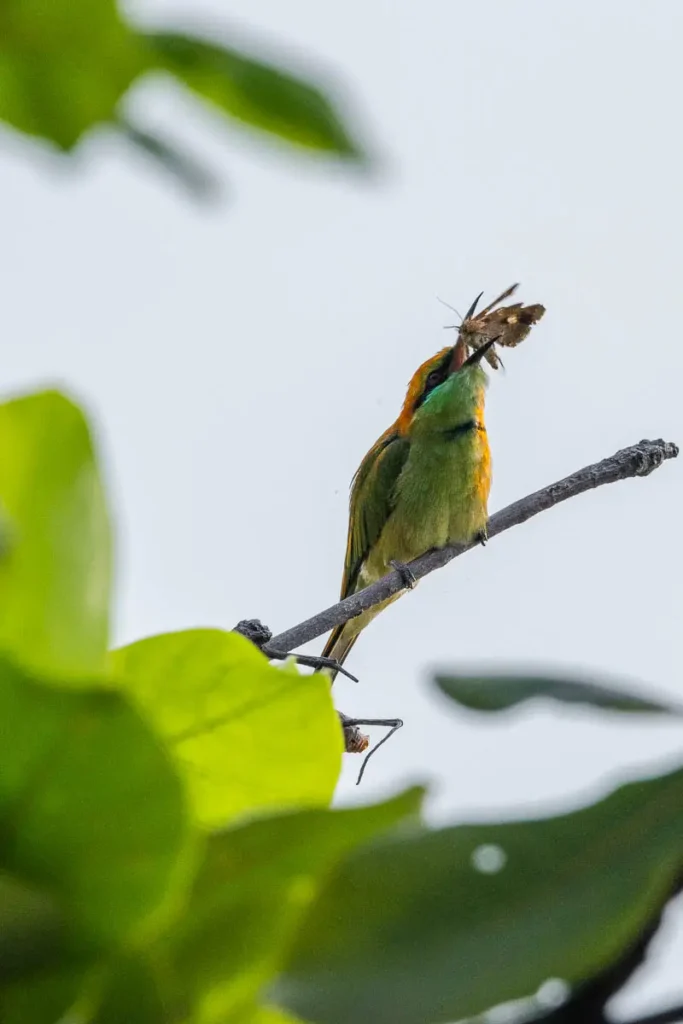
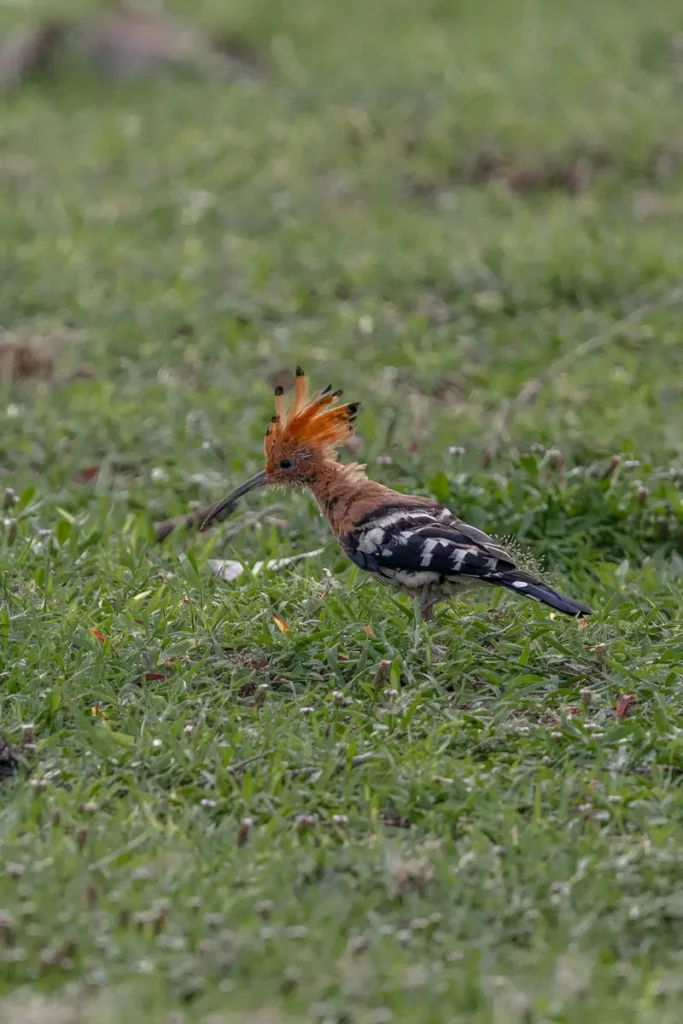
The beachfront village of Sam Roi Yot is on the outskirts of Khao Sam Roi Yot National Park and is home to a mix of wonderful birdlife. We spent two months staying in the village and saw several species every day, including Indian rollers, Asian koels, common mynas, green bee-eaters, and Eurasian hoopoes.
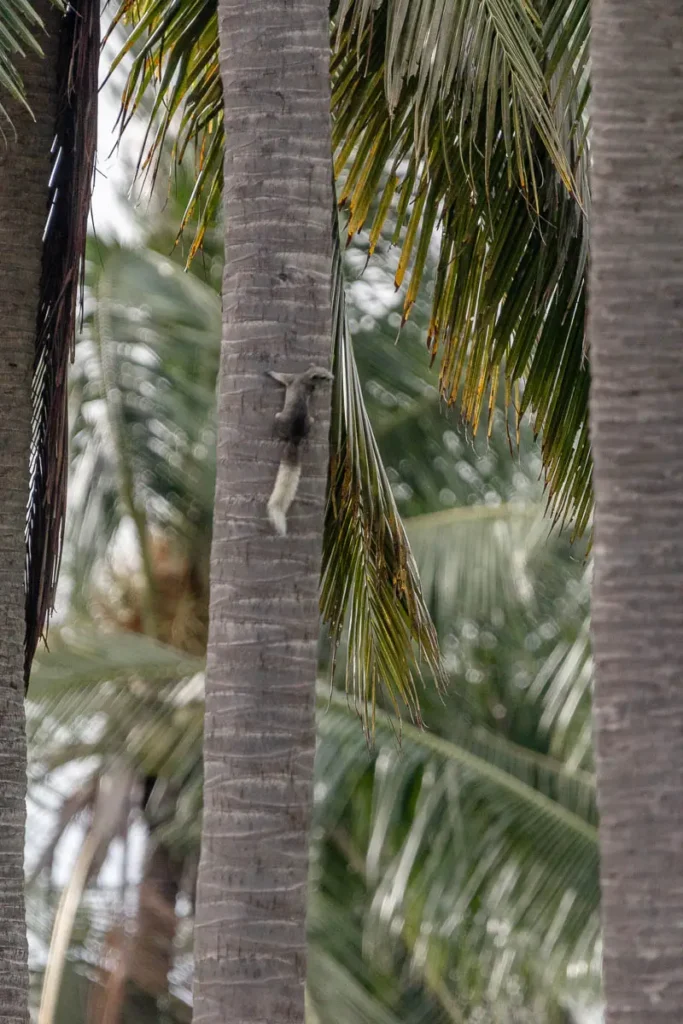
One of the best places to see birds in the village is along the beachfront, especially high up on the power lines. There are also several open fields with palm trees, and several species can be spotted in these areas. It’s possible to see more than birds too, with many other species in the village including Finlayson’s squirrels.
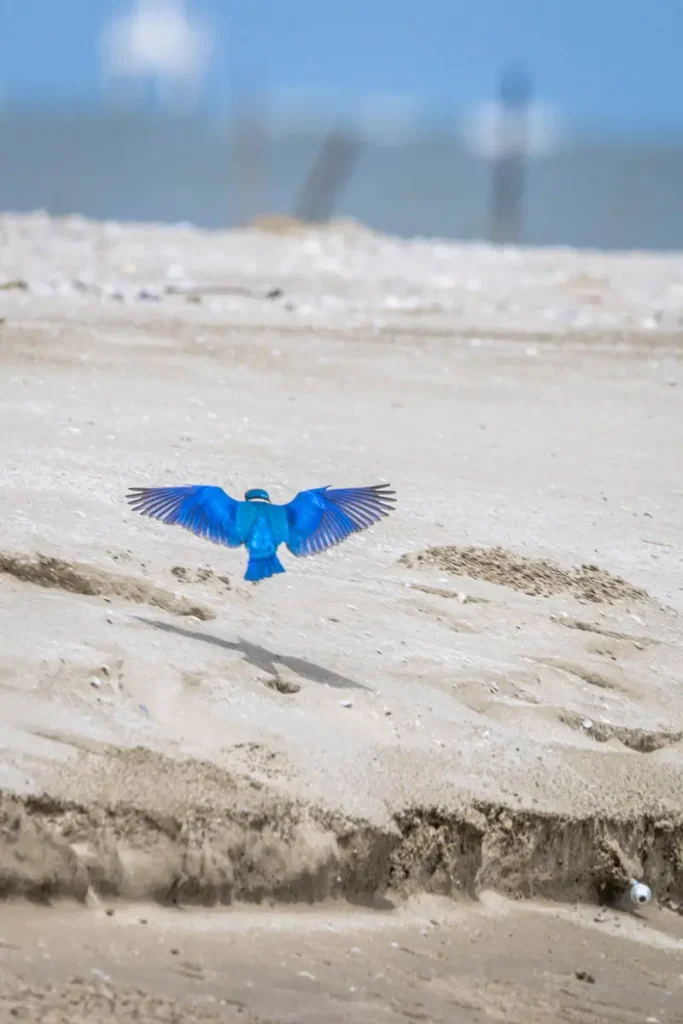
At the far end of the village, past Long Lay Market, there’s a small stream which almost dries up during low tide. This area is particularly good for spotting wildlife, from giant mudskippers to striated herons and white-throated kingfishers.
Possible wildlife sightings in Sam Roi Yot Village: White-throated kingfishers, Eurasian hoopoes, Indian rollers, green bee-eaters, Finlayson’s squirrels, and more.
Bueng Bua Wood Boardwalk
Arguably the best place to see wildlife in Khao Sam Roi Yot National Park, the Bueng Bua Wood Boardwalk is a particularly great spot for birdwatching. The boardwalk is one kilometre in length and stretches over the Thung Sam Roi Yot Freshwater Marsh, which is the largest freshwater marsh in Thailand.
This unique habitat helps to sustain a variety of birdlife, with over 350 different bird species having been recorded in the national park. Approximately half of the bird species found in the park are migratory species, so what you see will depend on the time of year that you visit.
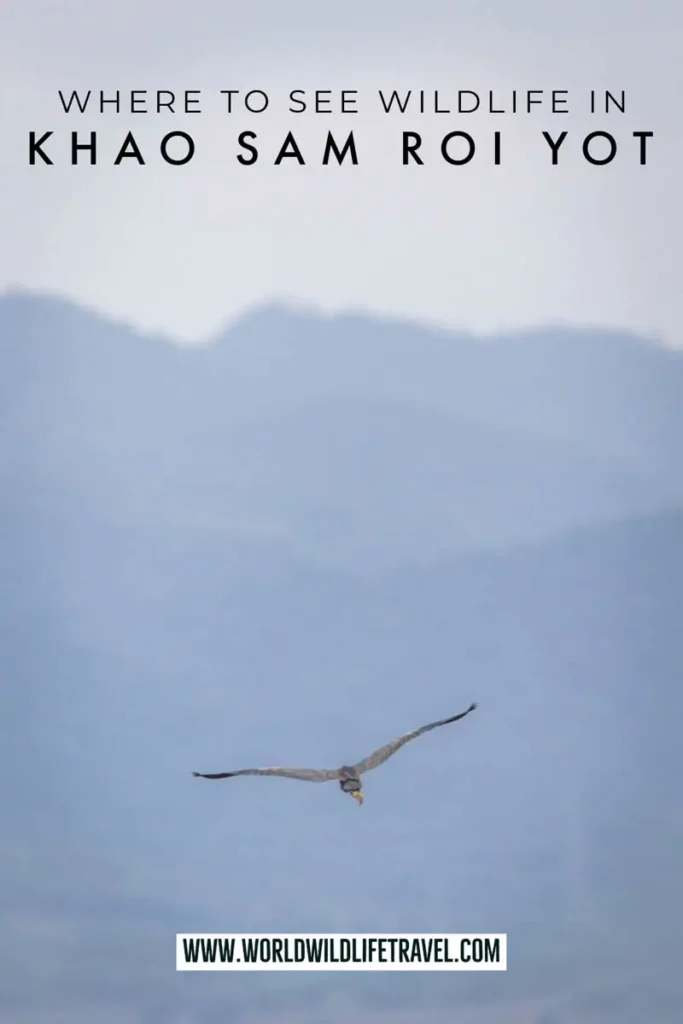
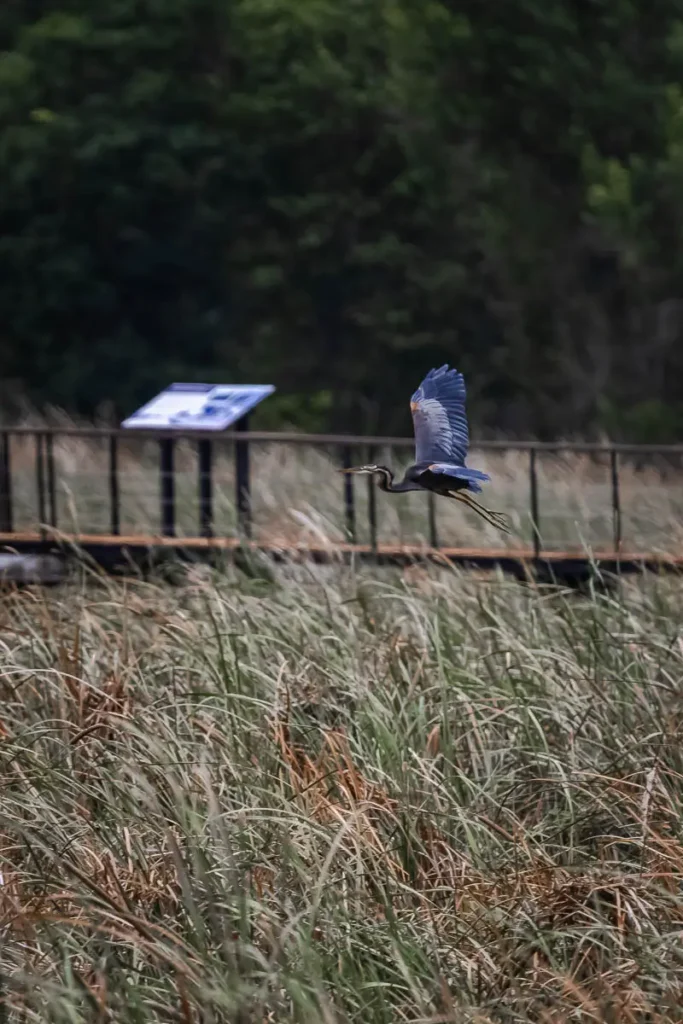
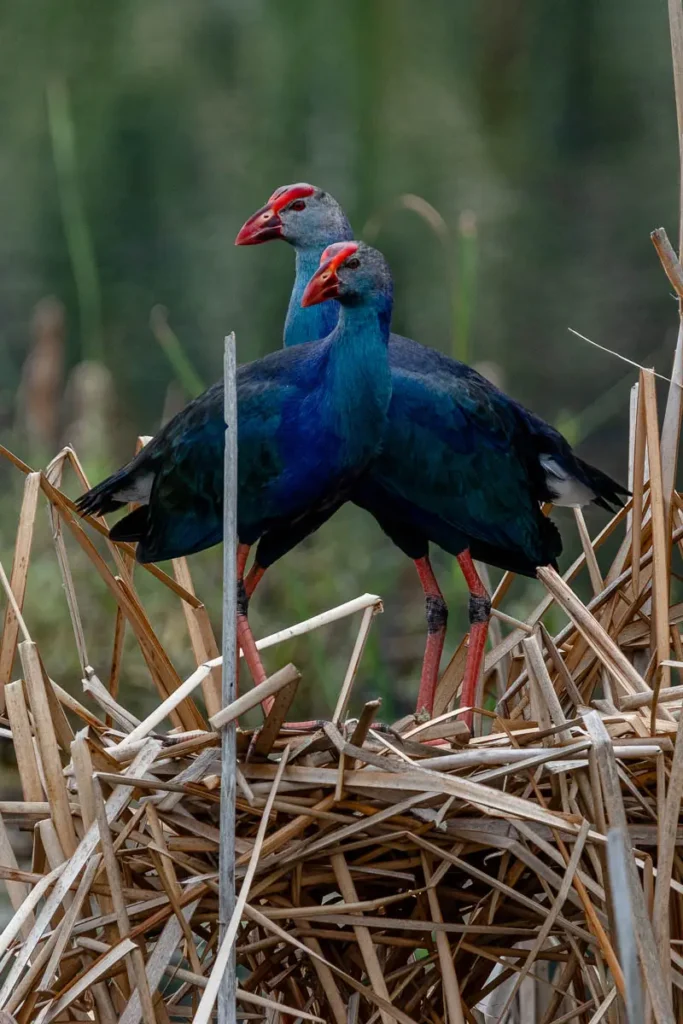
The area’s dry season runs from approximately November to April, and during this period many migratory birds can be seen in the area. Some of the species that can be seen at the Bueng Bua Boardwalk include grey-headed swamphens, purple herons, white-bellied sea eagles, and white-throated kingfishers.
It’s often possible to take a boat trip out on the water for 500 baht, which provides scenic views and gives you the opportunity to look for more of the park’s birdlife. If you visit during the rainy season then the boat trips may not be running, as was the case on our visit.
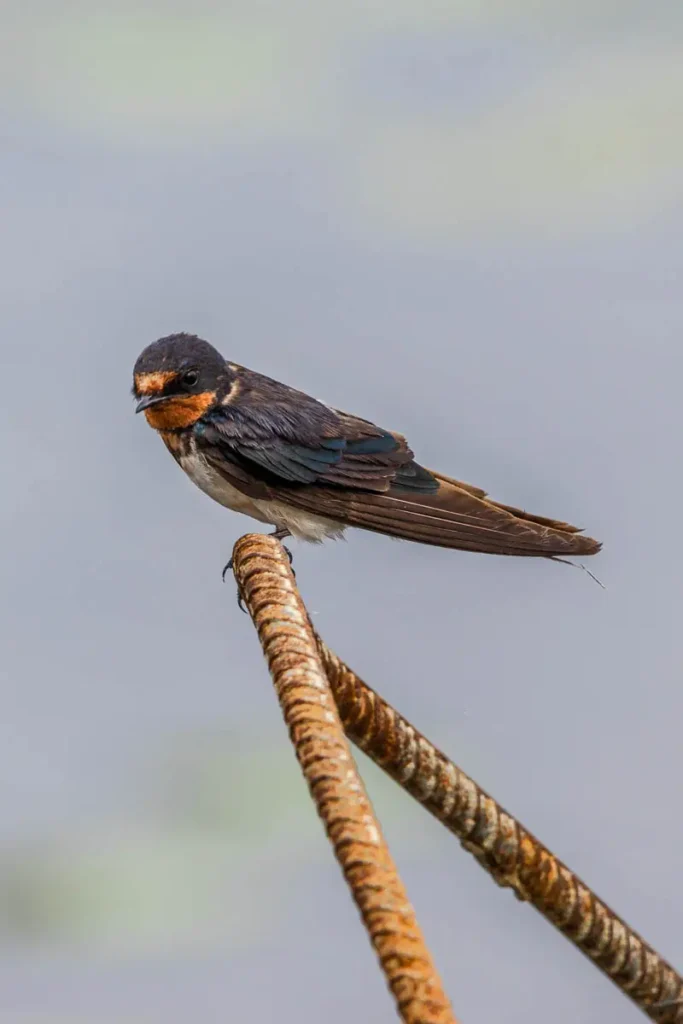
Possible wildlife sightings at the Bueng Bua Boardwalk: Purple herons, grey-headed swamphens, white-bellied sea eagles, Pacific swallows, white-throated kingfishers, and more.
Khao Daeng Canal
The Khao Daeng Canal, located on the edge of Khao Sam Roi Yot National Park, is one of the park’s best spots for wildlife watching. Hour-long boat trips along the canal cost just 500 baht (on top of the national park entrance fee) for up to six people.
Like many other places in Khao Sam Roi Yot National Park, the canal is particularly good for birdwatching. Birds regularly seen along the canal include great egrets, striated herons, red-wattled lapwings, and several species of kingfisher.
It’s also possible to see a number of other animal species in this area of the national park, including giant mudskippers, monitor lizards, long-tailed macaques, and some very colourful crabs.
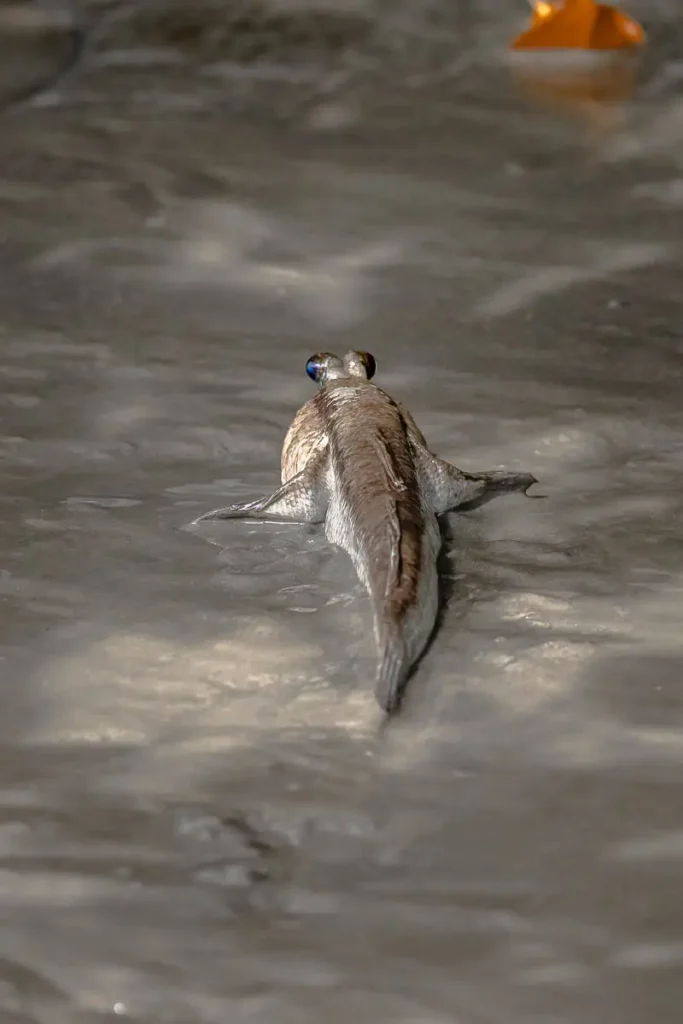
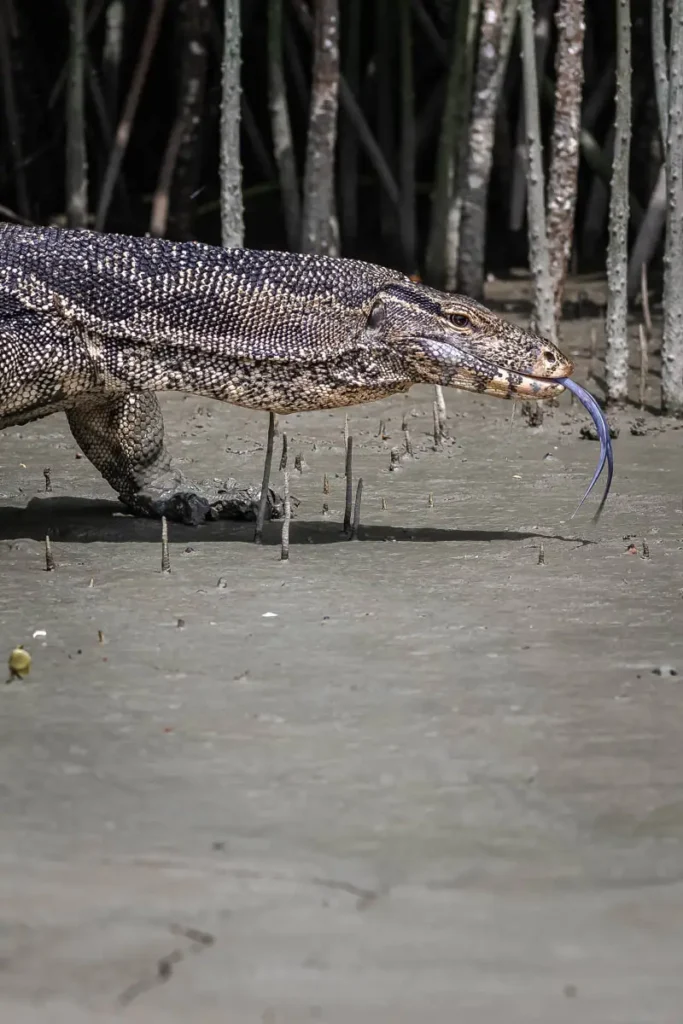
Boat trips along the Khao Daeng Canal lead you through a large section of mangrove forest and give great views of the national park’s limestone karsts. The scenery alone makes it a must-visit spot in Khao Sam Roi Yot National Park, before you even consider the wonderful wildlife.
One thing to be aware of is that these trips aren’t specifically designed for wildlife watching, so some boat drives may not stop for the wildlife. If your drive doesn’t speak English then it’s best to use Google translate to ask them to stop if you’ve spotted something and you want a better look!
Possible wildlife sightings at the Khao Daeng Canal: Giant mudskippers, collared kingfishers, great egrets, striated herons, monitor lizards, long-tailed macaques, and more.
If you like seeing wildlife than make sure to visit nearby Kui Buri National Park to see some wild elephants!
Please note that some links in this article are affiliate links, which means if you make a purchase we make a small commission at no extra cost to you. This money is used to support this website and cover the costs of keeping it online and free to access!
Like this guide to the best wildlife places to visit in Khao Sam Roi Yot National Park? Pin it!