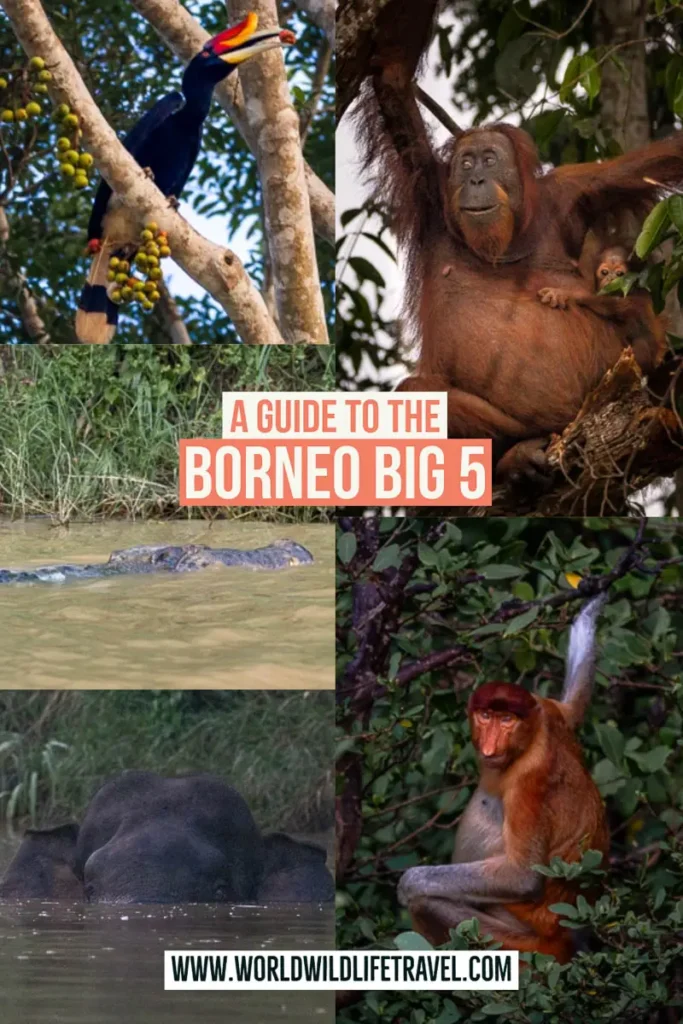
Borneo is well-known for its amazing wildlife, in particular the iconic Borneo Big Five. The big five consists of the island’s most unique animals: orangutans, Bornean pygmy elephants, proboscis monkeys, rhinoceros hornbills and estuarine crocodiles. Seeing these animals in the wild is on the bucket list of many wildlife lovers, but you have to know exactly where to find them to maximise your chances. Generally it’s best to visit the Malaysian states of Sabah and Sarawak to see wildlife in Borneo, as all of the big five can be seen fairly regularly, whereas sightings are less common in Indonesian Kalimantan or the small nation of Brunei. This guide provides information on the Borneo Big Five and the best places to see them in the wild.
The Borneo Big Five
Orangutan
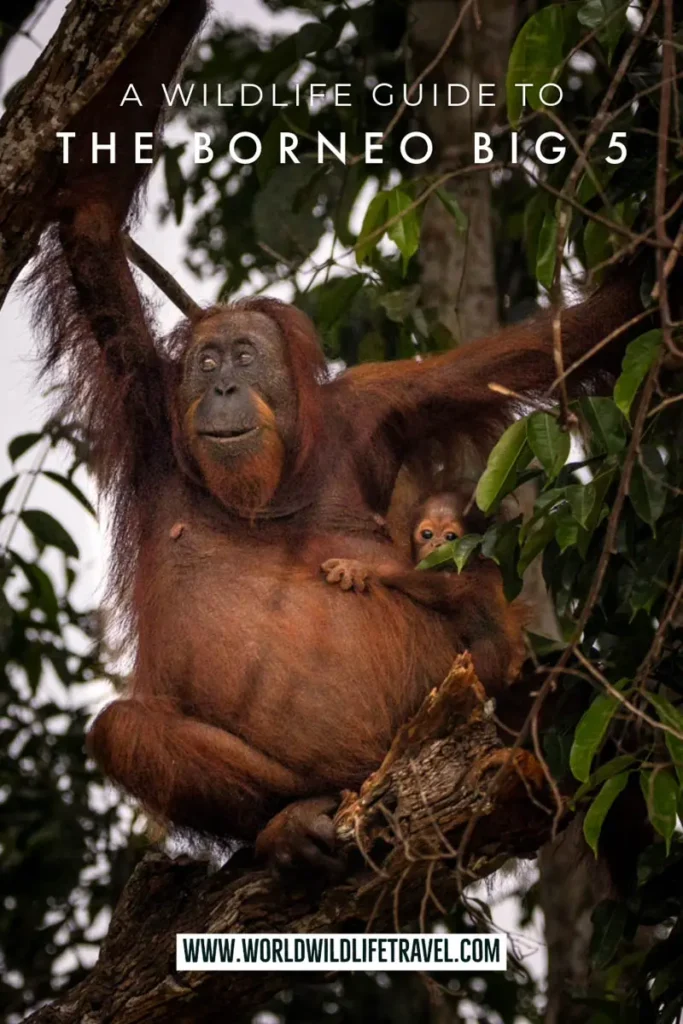
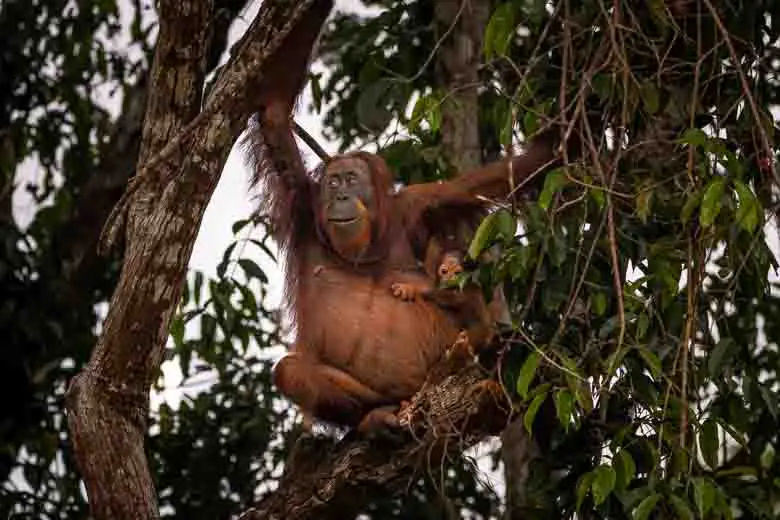
Orangutans are perhaps the most famous members of the Borneo Big Five, and are notoriously difficult to spot in the wild. They are native to Borneo and Sumatra, and their name translates to ‘person of the forest’ – which is appropriate considering 97% of their DNA is identical to human DNA.
These great apes play a vital role in Borneo’s ecosystem, spreading seeds and helping to maintain a healthy forest. Orangutans can live up to 50 years in the wild, and they build nests high in the trees of the Bornean rainforest.
Unfortunately orangutans are critically endangered and it’s estimated that there are around 100,000 of these impressive animals left in the wild, around half the number from a century ago. Habitat loss due to deforestation for palm oil plantations is one of the major causes of their decreasing population, along with illegal hunting.
Where to see Orangutans in the wild
The Kinabatangan River, in the Malaysian state of Sabah, is known as one of the best places to see wild orangutans in Borneo, with river cruises offering a chance to catch a glimpse of these beautiful creatures. To give yourself the best chance of spotting an orangutan it’s worth staying at a jungle lodge for a number of days and taking a number of river cruises. Click here to find jungle lodges along the river on Booking.com!
Borneo pygmy elephant
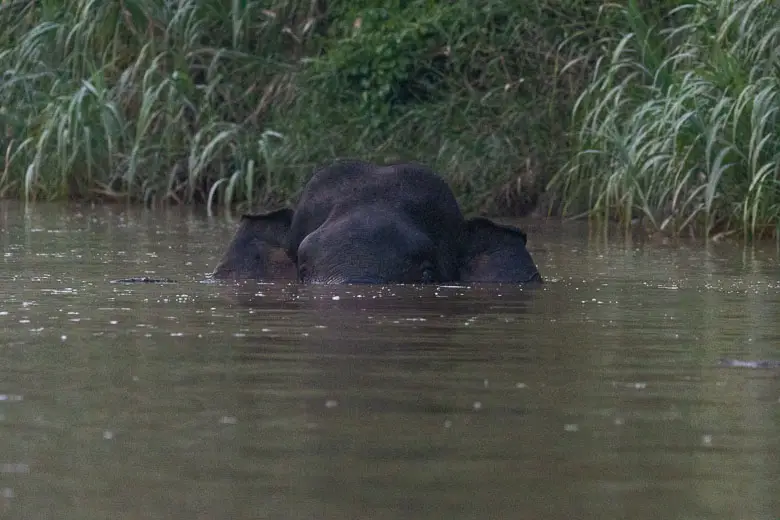
Borneo pygmy elephants are arguably the most elusive of the Borneo Big Five, with an estimated population of less than 1,500 individuals left in the wild. They are the world’s smallest elephant species, but can still grow up to 3 metres tall.
Also known as Bornean elephants, they are known for their calm nature and being less aggressive than other elephant species. They are an endangered species due to deforestation, in large part due to the palm oil plantations that have seen large areas of Borneo’s rainforest destroyed.
Where to see Borneo pygmy elephants in the wild
The Danum Valley and Kinabatangan River, both in the state of Sabah, are two of the best places to see Borneo pygmy elephants, but sightings are by no means guaranteed. They are notoriously difficult to see as they move about regularly, so if you want to see them it’s best to spend a minimum of three or four nights in either area to maximise your chances of a sighting.
Rhinoceros hornbill
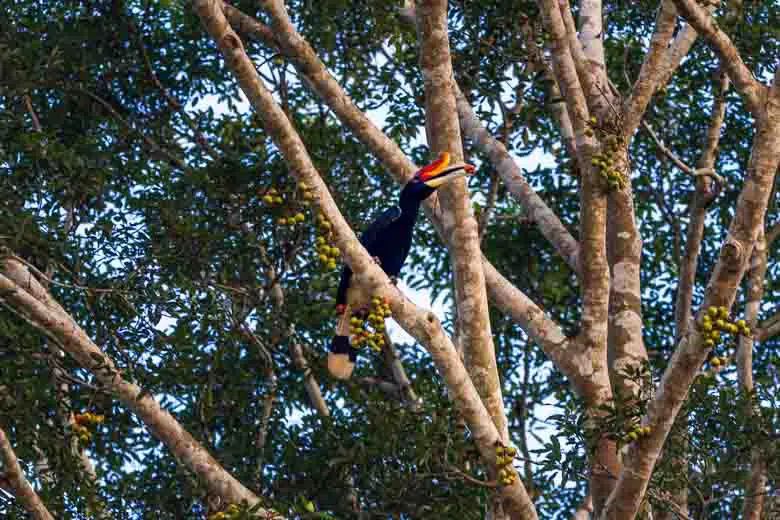
The rhinoceros hornbill is the only bird in the Borneo Big Five, and is one of the most impressive bird species on the island. There are eight hornbill species in Borneo, but the rhinoceros hornbill is easily identifiable due to its unique orange and red rhino-like horn above its beak.
Rhinoceros hornbills are monogamous and live in pairs, but are sometimes seen in small flocks when feeding. These beautiful birds mainly eat fruits and are crucial in dispersing seeds throughout the rainforest.
Like many of the wildlife species that make up the Borneo Big Five, the population of rhinoceros hornbills is unfortunately in decline and so they are listed as a vulnerable species.
Where to see rhinoceros hornbills in the wild
Rhinoceros hornbills can be seen in a number of different areas of Borneo, including the Kinabatangan River, the Danum Valley, and Bako National Park – one of the best places to see wildlife in Kuching. The Kinabatangan River is a particularly great place to see them, as it’s home to all eight of Borneo’s hornbill species including the oriental pied hornbill and the white-crowned hornbill. It’s one of the best places in Borneo for tours and safaris, and sightings are fairly common along the river.
Proboscis monkey
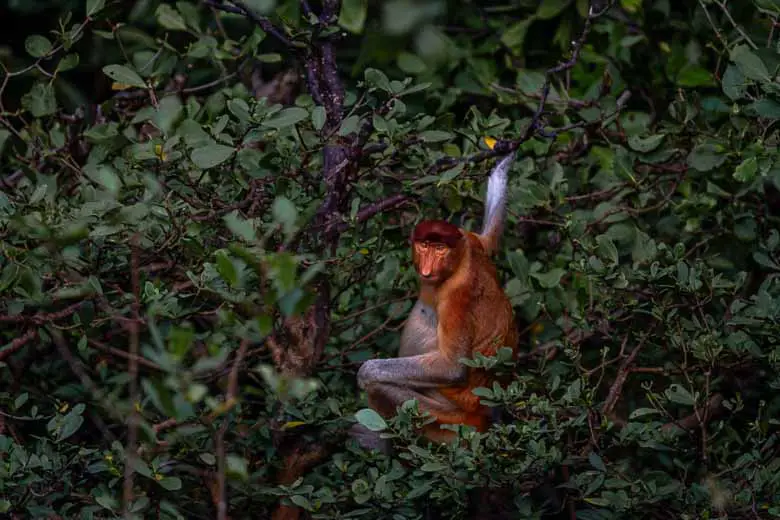
Proboscis monkeys are endemic to Borneo, and are best known for their unusually long noses and pot-bellied appearance. They are mainly found in coastal areas and mangrove forests, and are easily distinguished from other monkey species due to their reddish-brown skin and their unique noses.
Alpha male proboscis monkeys have particularly long noses and large pot bellies, whereas younger males and females don’t have such distinctive features. They are good swimmers, and are sometimes seen leaping into rivers to escape predators or to swim between feeding sites.
Proboscis monkeys are listed as endangered due to their declining population, with an estimated 16,500 individuals left in the wild.
Where to see proboscis monkeys in the wild
Proboscis monkeys tend to be one of the easiest wildlife species to see from the Borneo Big Five. They are particularly easy to see in Bako National Park (especially if you stay overnight), as well as on boat trips in the Kuching Wetlands National Park and along the Kinabatangan River.
Estuarine crocodile
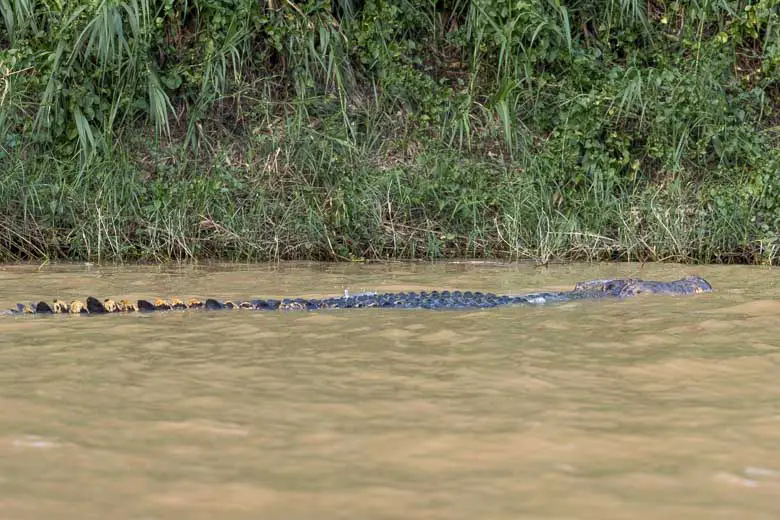
Estuarine crocodiles are perhaps the easiest species to see of the Borneo Big Five, with regular sightings along the island’s rivers. Also known as saltwater crocodiles, they can grow up to six metres long – although there have been reports of individuals over 10 metres in length.
They are ambush predators and eat a variety of prey including proboscis monkeys, rats, otters, birds, and water buffalo. Although they normally cruise along the river at speeds of just two or three miles per hour, they can swim at speeds of up to 18 miles per hour.
Where to see estuarine crocodile in the wild
Estuarine crocodiles can be found in rivers and mangroves around Borneo, with two particularly great spots to see them being the Kuching Wetlands National Park and the Kinabatangan River. At times you may just catch a glimpse of their eyes above the water, but it’s also possible to see them resting on the river banks which allows you to fully appreciate their size and power.
Please note that some links in this article are affiliate links, which means if you make a purchase we make a small commission at no extra cost to you. This money is used to support this website and cover the costs of keeping it online and free to access!
Like this guide to the Borneo Big 5? Pin it!